 Chinese Surname Guide
Bai Surname Origin: 白, 柏, and the Records That Distinguish Them
Quick Answer: Bai can represent 白, read Bái in Mandarin and also used as the word for "white." It can also represent the separate surname 柏: FamilySearch's Chinese genealogy image catalog lists both under Bai. If a record uses only the Roman spelling, find the original character before following an origin story. A surname can guide a search, but it does not establish a particular line of descent.
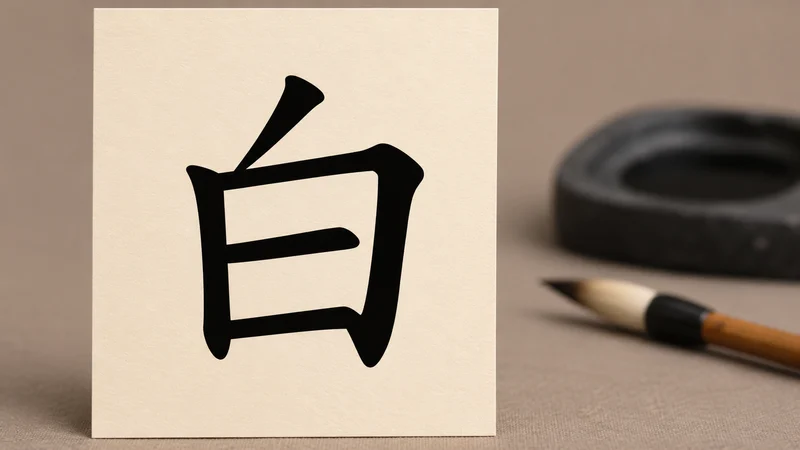
白: the character and its origin accounts
Taiwan's Ministry of Education dictionary entry for 白 gives the color and surname senses under Bái. Its Bai Juyi entry gives the reading Bái Jūyì for the Tang poet 白居易. His name is a documented example of the character and reading. It is not evidence that another person named 白 is related to him.
The Dictionary of American Family Names, second edition, lists several traditions for 白. One connects it to Bai, the fief associated with Bai Gong Sheng. Another traces a branch to Bai Zhou, a Tang administrative name associated with present-day Bobai in Guangxi. The dictionary also records explanations based on personal names. These are alternative accounts of a written surname, not successive generations in one pedigree.
The account for Duke Ai's sixteenth year in the Zuo Zhuan identifies Sheng and his title, Bai Gong. The chronicle establishes the title in that account; the claim that descendants took the place name as a surname belongs to the later origin tradition. Even if an old family register repeats that tradition, you still need records for the generations it does not identify.
Quick Facts
- Character for white
- 白 (Bái)
- Distinct surname
- 柏 includes 木 on the left; the dictionary lists Bó and Bǎi.
- Origin evidence
- Place-name and personal-name traditions are not family pedigrees.
- Record boundary
- Bai without a Chinese character does not establish either surname.
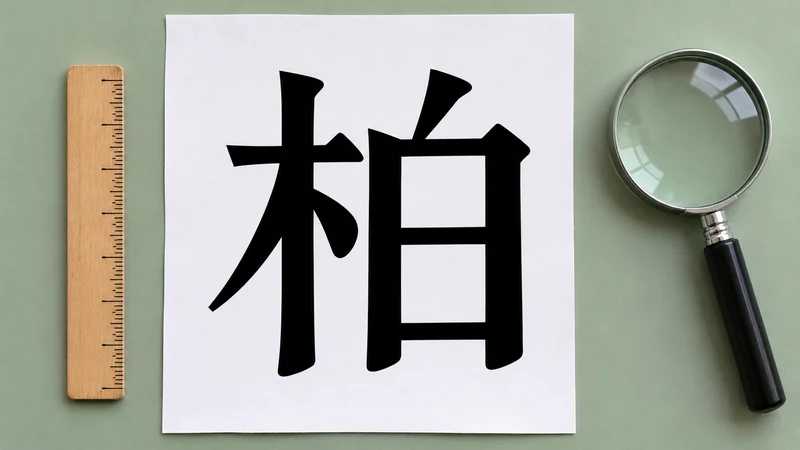
柏: look for the wood radical
柏 contains 木 on the left and 白 on the right. It is not an alternate simplified form of 白. The Ministry of Education entry for 柏 lists Bó and Bǎi and records a surname sense under Bó. FamilySearch uses Bai as a catalog label for its 柏 records. That catalog spelling does not settle a family's pronunciation.
The Dictionary of American Family Names treats 柏 separately. It records a tradition that links the surname to an ancient state named 柏. This is a different place-name account from the fief and Bai Zhou accounts for 白. Do not move an origin from one character to the other because both are indexed as Bai.
Quick Reference
| Written form | What it tells you | What it does not tell you |
|---|---|---|
| 白 | The written surname; Bái in the examples above | A specific branch or relation to Bai Juyi |
| 柏 | A distinct surname with 木 on the left | Which reading a particular family uses |
| Bai only | A Romanized spelling worth searching | Which character or origin story applies |
If an index entry reads "Bai," check the document image or a separate record with the Chinese name. Zoom in on the left side of the character. A cropped photograph can lose the 木 radical, and an automated transcription can return an apparently valid but different surname. Keep the original image and note uncertainty separately rather than silently correcting the family name.
Link a spelling to a person before tracing an origin
Imagine a shipping list records "Bai" and gives a village, while a dated family inscription gives a relative's Chinese name. The village narrows the search, but a match needs more than one shared clue. Compare the given names, relationships and dates. If the inscription belongs to a different relative, first establish how the two people are linked before assigning its character to the person on the list.
Write down what each source actually gives you. For example, "passenger list: Bai, village recorded, no Chinese character" is an observation. "Likely the same person as the inscription" is a hypothesis. A second dated record with a matching given name and relationship can help you test it. The site's guide to Chinese surname versus given name helps identify the correct field, and its surname origin overview distinguishes a name tradition from a documented lineage.

Questions about the Bai surname
Do Bai and Bái represent the same spelling?
Bái is the tone-marked Pinyin form given for 白 in the example above. Bai can be that spelling without a tone mark, but an English record may use Bai for another character, including 柏.
Does Bai always mean "white"?
No. "White" is a dictionary sense of 白. It does not describe 柏, and it is not proof that every 白 family shares one origin story.
Can a family use the Bai Gong Sheng account as its genealogy?
Only as a traditional account unless records connect that family to the claimed branch. Begin with the most recent known generations and work backward through identified documents.