 Chinese Surname Guide
Why Chinese Family Names Come First: A Guide for Forms and Introductions
Learn why Chinese family names come first, how to handle forms and introductions, and when a romanized record needs confirmation.
In the traditional Chinese order, the family name comes first and the given name follows. When a full Chinese name is known, do not reverse it automatically for an introduction or record; when a romanized form is unclear, use the person's stated preference or the form's instructions instead of guessing.
Name-order situations at a glance
- Scenario: a full Chinese name
- In the traditional order, the family name comes first and the given name follows it.
- Audience: a host or colleague
- Use the presentation the person gives you rather than silently rearranging it to fit an English habit.
- Use case: forms and lists
- Follow the form labels, then confirm which part is the surname when a romanized record is unclear.
- Risk: romanization
- Spelling alone may not prove the original character, dialect, legal order, or family relationship.
- Next step: respectful check
- Ask how the person would like the name written or addressed when the setting matters.
Start with the family name when the full Chinese name is known
Chinese names are commonly presented with the family name first and the given name after it. That order is not a puzzle to solve; it is the normal starting point when a person gives a full Chinese name in that format. A host reading a guest list, a teacher introducing a student, or a relative looking at a family note can begin by keeping the first position intact.
The useful distinction is between a family name and a given name, not between a name that feels familiar in English and one that does not. Many Chinese family names are one syllable, while a given name may have one or two syllables, but the visible length of a romanized word is not enough proof on its own. A full name, a person’s stated preference, or a reliable family record is better evidence than a quick guess.
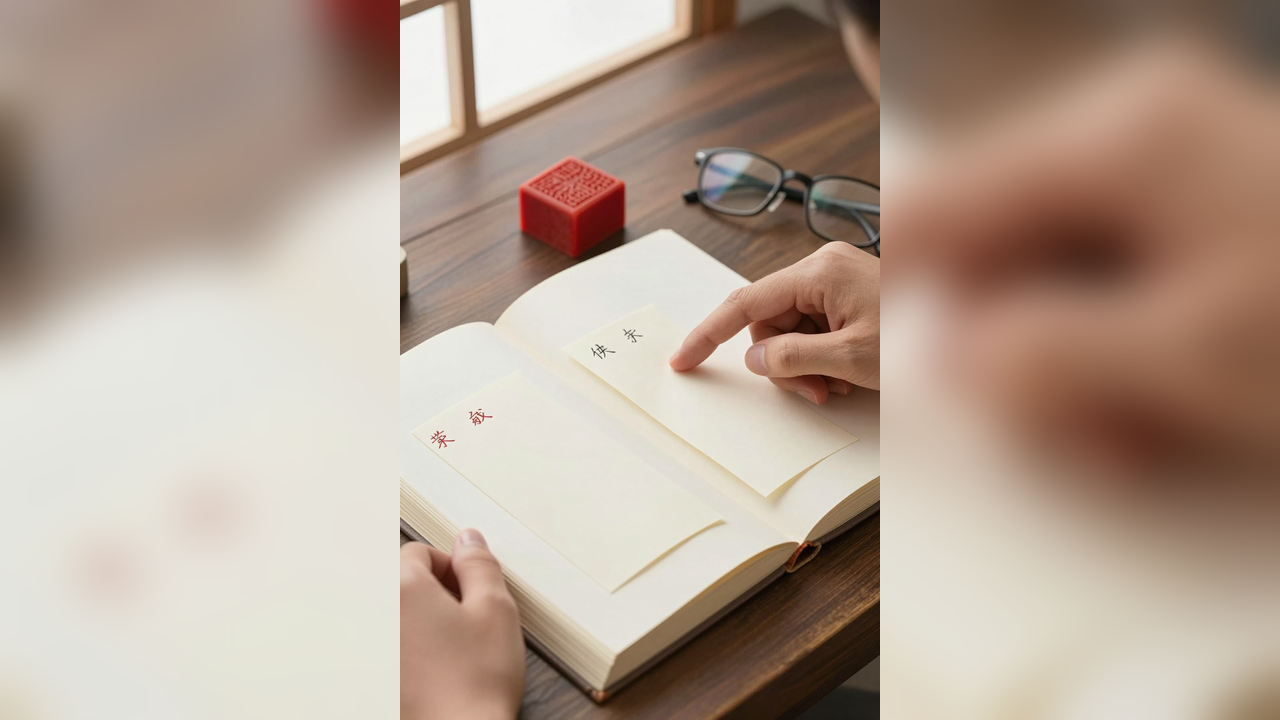
Picture a family notebook with a name written in its usual order. The first part connects the person to the family-name position; the following part identifies the individual. That small observation helps a reader understand why reversing every name by default can make a careful record or introduction less accurate.
Use the name order carefully in introductions and invitations
An introduction has a human side as well as a formatting side. When someone introduces themselves using family name first, repeat the name in the form they used unless they tell you otherwise. In a wedding invitation, school program, reunion list, or community event, consistency is kinder than forcing each name into one imported pattern.
Titles and forms of address can add another layer. A person may use a family name with a professional title, a given name among friends, or an English name in some settings. None of those choices cancels the traditional name order. They simply show that people can choose different presentations for different audiences.
The common mistake is treating the name order as a test with one answer for every context. A good host checks the invitation reply, the name badge proof, or the person directly. This respects both the cultural convention and the individual’s preference without making a public introduction feel like a correction exercise.

Treat romanized names and English forms as a confirmation task
Romanization makes Chinese names readable in the Latin alphabet, but it does not always preserve every detail a reader wants. The same surname may appear under different spelling systems, and an English-language record can place family name and given name in an order chosen for a passport, workplace, school, or personal preference.
That is why a form should be read as instructions rather than as a reason to rearrange a name from memory. If a field says Family name or Surname, use the part the person or official record identifies that way. If it says Given name, do the same. When the labels are vague, keep the supplied presentation or ask before submitting anything important.
A desk check is especially useful for tickets, school registrations, mailing labels, and contact lists. Compare the name with the source document, note whether the form separates surname and given name, and preserve spelling exactly. This is a practical accuracy habit, not a way to infer genealogy, citizenship, or language from a name.

Keep a family record separate from a name-order assumption
A surname can point a reader toward a cultural topic, but it cannot prove an exact clan, place of origin, or ancestor. Many people share a surname, and families may use different characters, dialect spellings, migration histories, and record practices. The sensible boundary is simple: name order explains how a name is presented, while genealogy needs its own evidence.
For family research, record what you can actually verify: the spelling used on a document, the original characters when the family confirms them, dates, places, and the source of each note. Do not fill a gap by selecting a famous family story or by converting a familiar romanized spelling back into a character without proof.
Once the order and spelling are clear, the next useful page may be a pronunciation guide, a surname lookup, or Hundred Family Surnames context. Each answers a different question. Separating those tasks keeps a small name-order check from becoming a loose claim about someone’s identity.
A respectful name-order check before you send the form
- Keep the family-name-first order when a full Chinese name is presented that way.
- Read whether a form separates surname and given name before entering anything.
- Copy the supplied spelling exactly rather than rebuilding it from memory.
- Ask the person or use the verified record when romanized order is uncertain.
- Keep genealogy questions separate from a simple name-order decision.
Questions about Chinese family-name order
Do Chinese surnames come before given names?
In the traditional Chinese order, the family name comes first and the given name follows. A person may choose a different display order in an English-language setting, so use the presentation they give or the form instructions.
How do I know which part of a Chinese name is the family name?
A full Chinese name is usually presented with the family name first. If you only have a romanized record or a form with unclear labels, confirm with the person or a reliable source instead of inferring it from word length or spelling.
Should I reverse a Chinese name on an English form?
Do not reverse it automatically. Follow fields such as Surname and Given name, and preserve the order or spelling shown on the person’s verified document when the form does not make the split clear.
Can a romanized name always show the original Chinese name order?
No. Romanization and legal display conventions vary. A Latin-alphabet spelling alone may not identify the original characters or show how the person wants the name ordered in every setting.