 Chinese Surname Guide
Dong Surname Origin: 董, 東, and What the Sources Say
Finding 'Dong' in a family document is a beginning, not a complete surname identification. The Chinese character changes both the reading and the origin account worth consulting. Start with the written name before attaching a familiar story to it.
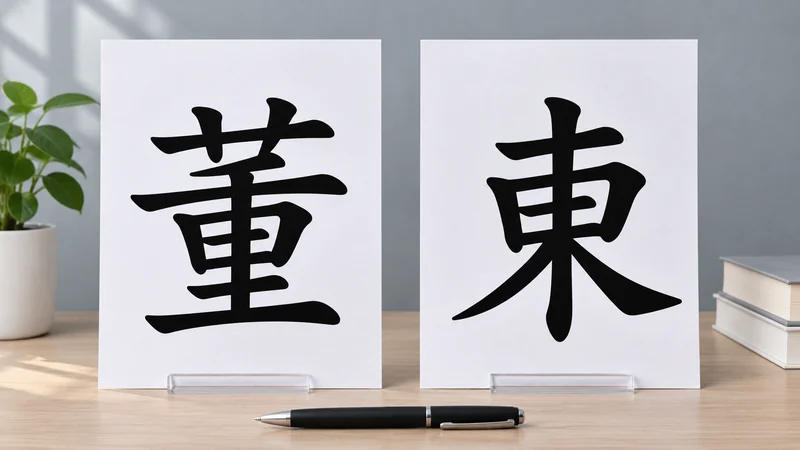
Quick Answer: Dong can represent different Chinese surnames. 董 is read Dǒng in Mandarin; 東, simplified 东, is read Dōng and is a separate surname meaning 'east.' A traditional account links 董 to Dong Fu and Emperor Shun, but that narrative does not establish a modern family's ancestry. Identify the character first, then distinguish an origin tradition from a documented family line.
Two written surnames behind Dong
- 董: Mandarin pinyin
- Dǒng, third tone; a surname and a character used for supervising or managing.
- 東 / 东: Mandarin pinyin
- Dōng, first tone; 'east' and a distinct surname.
- Script variant
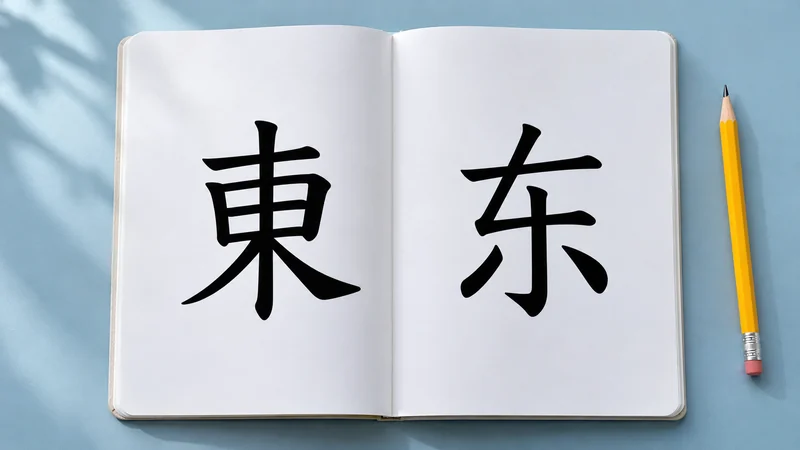
- 東 and 东 are traditional and simplified forms; neither is a simplified form of 董.
- Origin-source boundary
- A traditional surname narrative is not a generation-by-generation pedigree.
Pronunciations and character meanings below come from dictionary entries. The origin passages are identified separately; a tone mark is not evidence of ancestry.
The character answers the first part of the question
The ZDIC entry for 董 gives the Mandarin reading dǒng and lists surname usage. Its ordinary meanings include supervision and management. That word meaning helps identify the character; it is not sufficient evidence that a particular ancestor held a supervisory office.
The entry for 東 gives dōng, 'east,' and surname usage. In simplified writing it appears as 东. The tone difference matters in Mandarin, but a document that records only the letters Dong may not preserve it. Do not choose a Chinese character by selecting whichever English meaning you prefer.
These two examples are not a claim that every person recorded as Dong belongs to one of only two groups. They explain why the romanized spelling by itself does not settle the question. Copy the original character as it appears in a reliable family or official record, including its script form.
董父 and the traditional account of the surname 董
In its reproduction of the Kangxi Dictionary, ZDIC's 董 entry cites the Zuo Commentary, Duke Zhao's twenty-ninth year. The cited narrative describes Dong Fu, 董父, his connection with dragons and service to Shun, who is said to have bestowed the surname 董. This is a specific traditional explanation, not merely the modern dictionary meaning of the word.
Read it as an account preserved in an early literary tradition. It should not be converted into a verified birth date for the surname, a biological descent claim, or proof that every later Dong family shares a continuous line from the figure. The dragon-keeping setting is part of the narrative, not a basis for identifying a modern clan from an illustration.
The useful distinction is between what the text says and what an individual family can demonstrate. A family may preserve this origin story, but establishing its own generations still requires evidence linking actual people. Recording the tradition alongside that evidence is more honest than filling an undocumented gap with a legendary ancestor.
Dong Hu shows name usage, not your place in a pedigree
The same dictionary section separately cites Dong Hu, 董狐, as an ancient historian, referring to the Zuo Commentary under Duke Xuan's second year. His name is evidence of the name's appearance in the cited textual tradition. It does not supply the missing links between a modern person and that named figure.
This distinction prevents a common shortcut: moving directly from a surname dictionary to a famous bearer and then calling that person an ancestor. A shared surname can prompt a research question, but it cannot answer the relationship question on its own. Nor does a general meaning such as 'supervise' establish that the two people inherited the name through the same occupational history.
If your family has a written account connecting itself to a named historical figure, preserve its title, edition and the actual sequence of relationships. An introductory origin statement and a list of generations perform different jobs. Read both, rather than treating the former as a substitute for the latter.
東 has its own entry and should not inherit 董's story
The dictionary treats 東 as a separate surname. Its Kangxi material cites the traditional work 聖賢羣輔錄 and names 東不訾 in connection with Shun. That is a different written name and attribution from the 董父 passage. Do not silently replace one character with the other because an English transcription makes both look like Dong.
The word 'east' is a lexical meaning, not proof that a family's ancestors came from eastern China. A direction word cannot establish a home county, migration route or clan. Likewise, the traditional association with Shun should be labeled as a source account rather than presented as a documented relationship to every current bearer.
Different reference works may offer other explanations or spellings. Compare the actual character and the named source before combining them. This article does not claim to resolve every regional transcription or every family tradition under the letters Dong.
東 and 东 change the script, not the surname into 董
When an older document uses 東 and a later one uses 东, the script change is not in itself evidence of a change to 董. Keep the original spelling in a transcription and add a separate normalized form if you need one for searching. That preserves what the document actually shows.
For example, imagine a modern family note with a surname field copied as 董 and an English field written Dong. The two fields identify a different character from a note pairing 東 with Dong. This is an illustrative comparison, not an archival record or proof that the two writers are related.
If the name position is also uncertain, the surname-versus-given-name guide explains how to separate those fields. A character used in a given name should not automatically be treated as the family's surname.
Keep the family question separate from the dictionary answer
A surname reference can identify a character, reading and attributed origin account. For your own line, start with the earliest person you can identify reliably and compare names, dates, places and stated relationships. Keep uncertainty attached to the particular missing connection instead of rejecting or accepting an entire origin tradition at once.
The Yu surname article offers another example of why an English spelling does not identify one Chinese character. It is a comparison of the identification problem, not evidence that Yu and Dong families share an origin.
A useful final description is modest and specific: 'Our record writes the surname 董, read Dǒng in Mandarin; this dictionary preserves a Dong Fu origin account, while our documented family line currently begins with a separately identified person.' That wording answers the cultural question without inventing the genealogical answer.
Quick Reference: what each source can establish
| Evidence | Supports | Does not establish |
|---|---|---|
| Dictionary reading | Dǒng for 董; Dōng for 東 | A personal ancestral relationship |
| Traditional 董父 account | An attributed explanation of surname origin | An independently proven continuous pedigree |
| 東 / 东 spelling | Traditional/simplified correspondence | A conversion of 東 into 董 |
| Family document | What a named record actually says | A relationship not recorded or corroborated |
Preserve original characters, source titles and uncertainty separately.
Questions about Dong characters and origin accounts
Does Dong always mean east?
No. 'East' is the meaning of 東 or 东, read Dōng. 董, read Dǒng, is a separate character and surname.
Is 董 the simplified form of 東?
No. 东 is the simplified form of 東. 董 is a different character.
Does the Dong Fu story prove my family descends from him?
No. It is an attributed traditional origin account. A personal descent claim needs evidence connecting the actual generations.
Are the Mandarin tone marks supplied by a surname-origin story?
No. The readings here are taken from dictionary entries; the traditional origin passages and personal family records are separate evidence.
Character entries and attributed textual accounts
- ZDIC 董: dǒng, surname usage, and Kangxi citations to Zuo Commentary
- ZDIC 東: dōng, east, surname usage and traditional citations
Dictionary pages checked November 3, 2026. Pronunciation, lexical meaning and quoted-source traditions are distinguished. Modern illustrations are not historical documents or lineage evidence.