 Chinese Surname Guide
Min Surname Origin: 閔, 闵, and the Limits of a Romanized Name
Quick Answer: One Chinese surname written Min in English is 閔 (simplified 闵), pronounced Mǐn in standard Mandarin. One traditional account connects the name to the posthumous title of Duke Min of Lu, but the historical sources do not agree on direct descent. The same spelling also occurs in other name traditions and is not enough to identify the character.
Start with the character, not the country
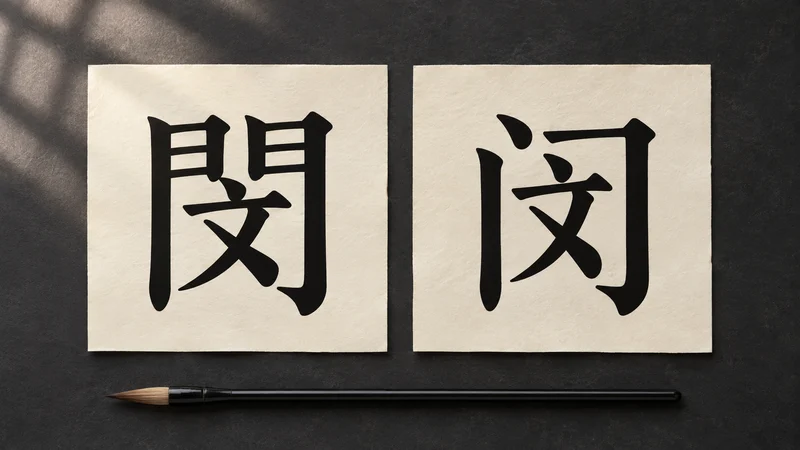
The Han Dian entry for 闵 identifies 閔 as the traditional form, gives the pronunciation mǐn, and lists use as a surname. The two forms are equivalent for this lookup, but keep whichever form your document actually uses. If your record instead contains 文 or only “Min,” don't silently substitute 閔.
Quick Reference
| Record says | What you can conclude |
|---|---|
| 閔 in the surname field | The record uses the traditional form of the surname discussed here |
| 闵 in the surname field | The record uses its simplified form |
| Min in a clearly labeled surname field | You have the recorded spelling, but not the original character or language |
| Min in an unlabeled full name | First establish which part is the surname |
The table concerns identifying a written name, not identifying a person's nationality. A character may appear in records written in more than one language. Likewise, a Latin spelling may reflect an official form, family practice or transcription rather than modern Mandarin.
Quick Facts
- Character
- Traditional 閔, simplified 闵.
- Mandarin reading
- Mǐn, third tone.
- Origin account
- A historical surname account connects the name with Duke Min of Lu; a county gazetteer records an objection to direct descent.
- Evidence boundary
- The romanized spelling alone does not identify a character or lineage.
What the Duke Min origin account establishes
The 閔氏 entry in the Republican-era Hechuan County Gazetteer preserves a tradition connecting the surname with Duke Min of Lu. The compiler then objects that the duke was killed before reaching adulthood and doubts the claimed descent. The gazetteer establishes that the account was recorded and disputed, not that either side settled every Min family's origin.
Han Dian supplies the Mandarin reading of 閔/闵. The gazetteer documents an origin account and an objection to it. Neither identifies which character applies to an unlabelled English-language document. Keep the name's reported history separate from the records of the person you are trying to identify.

Work from the earliest record you can link to a person
Suppose a passenger list gives “Min” and a family letter gives “閔.” Compare the given name, age or date, places, and relatives before treating the letter as a match. Write down the records separately. If the dates and people agree but you still lack a document connecting the two, keep the match as a hypothesis. A repeated spelling is a lead, not the missing relationship.
The guide to surname and given-name fields helps when the document gives only one name line. If the same person appears with a different word order in two records, the Chinese family-name order guide explains why order can change. Preserve each source's spelling and name order even if you use one preferred form in your notes.

Two questions about the written surname
Does the surname mean “sorrow” in a modern name?
Han Dian lists senses related to sorrow and sympathy separately from the surname use. In a person's name, 閔 is a surname, not a description of the person.
Can I decide that Min means 閔 from the spelling alone?
No. Ask for the original writing or look for a record where the name is clearly attributed to the same person. Keep alternatives open until you can match it.